

In the world of manufacturing and industrial production, the question of whether stamped parts can be customized is a crucial one for many businesses. As a seasoned stamped parts supplier, I've witnessed firsthand the diverse needs of our clients and the solutions we've provided through custom stamping. In this blog, I'll delve into the possibilities, benefits, and processes of customizing stamped parts.
The Feasibility of Customizing Stamped Parts
The short answer is yes, stamped parts can indeed be customized. Stamping is a highly versatile manufacturing process that can be adapted to create a wide range of parts with different shapes, sizes, materials, and finishes. Whether it's a simple Flat Washers or a complex Precision Metal Stamping Part, customization is within reach.
The stamping process involves using a die to cut, shape, or form metal sheets into the desired part. By modifying the design of the die, we can create unique parts that meet the specific requirements of our clients. This flexibility allows us to serve various industries, including automotive, electronics, aerospace, and construction.
Benefits of Custom Stamped Parts
1. Perfect Fit for Specific Applications
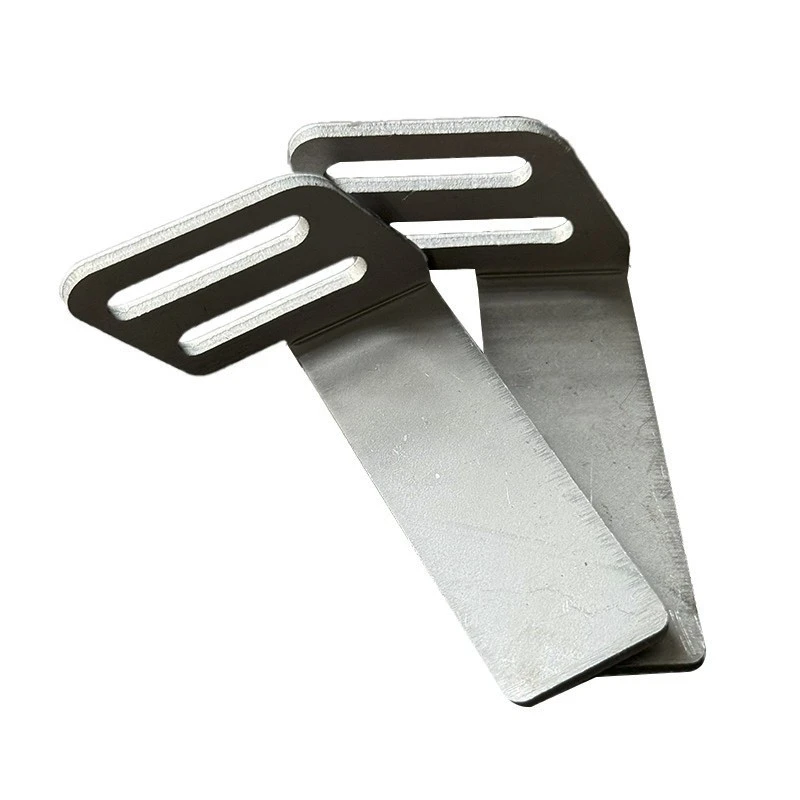
Customized stamped parts are designed to fit precisely into the intended application. This ensures optimal performance and functionality. For example, a Stainless Steel Bending Bracket can be tailored to the exact dimensions and angles required for a particular piece of machinery, providing a secure and stable connection.
2. Cost - Efficiency in the Long Run
Although the initial tooling cost for custom stamping may be higher than off - the - shelf parts, the long - term cost benefits can be significant. Custom parts reduce the need for additional modifications or adaptations, minimizing labor and material waste. Moreover, they can improve the overall efficiency of the production process, leading to lower production costs over time.
3. Enhanced Product Quality
When parts are customized, we have greater control over the manufacturing process. We can select the most appropriate materials and manufacturing techniques to ensure the highest quality. For instance, a Galvanized Corner Bracket can be made with high - quality galvanized steel, providing excellent corrosion resistance and durability.
4. Competitive Advantage
Custom stamped parts can give our clients a competitive edge in the market. By offering unique and innovative products, they can differentiate themselves from their competitors. This is particularly important in industries where product performance and quality are critical factors.
The Customization Process
1. Design and Specification
The first step in the customization process is to understand our client's requirements. This involves detailed discussions about the part's function, dimensions, material preferences, and any special features. Our experienced engineers work closely with the clients to translate their ideas into a detailed design. We use advanced CAD (Computer - Aided Design) software to create accurate 3D models of the parts, allowing the clients to visualize the final product.
2. Tooling Development
Once the design is finalized, we move on to tooling development. The die is the heart of the stamping process, and its design and construction are crucial for producing high - quality parts. Our tooling experts use advanced machining techniques to create precise dies that can withstand the high pressures and stresses of the stamping process. The tooling development process may take some time, but it is essential for ensuring the accuracy and consistency of the custom parts.
3. Material Selection
The choice of material depends on the specific requirements of the part. We offer a wide range of materials, including steel, aluminum, copper, and stainless steel. Each material has its own properties, such as strength, corrosion resistance, and conductivity. For example, an Oil Pump Gasket may require a material with excellent sealing properties and resistance to oil and heat. Our material experts can help clients select the most suitable material for their application.

4. Stamping and Production
After the tooling is ready and the material is selected, we start the stamping process. Our state - of - the - art stamping presses are capable of producing parts with high precision and efficiency. During the production process, we conduct regular quality checks to ensure that the parts meet the specified requirements. We use advanced inspection equipment, such as coordinate measuring machines (CMMs), to verify the dimensions and quality of the parts.
5. Finishing and Assembly
Once the parts are stamped, they may require additional finishing operations, such as painting, plating, or heat treatment. These finishing processes can enhance the appearance, durability, and performance of the parts. In some cases, we also offer assembly services, where we can assemble multiple stamped parts into a complete sub - assembly or product.
Challenges in Customizing Stamped Parts
While customizing stamped parts offers many benefits, it also comes with some challenges.
1. Tooling Costs
As mentioned earlier, the initial tooling cost for custom stamping can be relatively high. This can be a barrier for some small - scale businesses or projects with a limited budget. However, we work closely with our clients to find cost - effective solutions, such as sharing tooling costs or using alternative manufacturing processes for low - volume production.
2. Lead Time
The customization process, especially tooling development, can take some time. This may result in a longer lead time compared to purchasing off - the - shelf parts. To minimize the lead time, we have optimized our production processes and established efficient supply chains. We also maintain good communication with our clients to keep them informed about the progress of their orders.
3. Design Complexity
Some custom designs may be very complex, requiring advanced manufacturing techniques and expertise. In such cases, we need to carefully evaluate the feasibility of the design and ensure that we have the necessary capabilities to produce the parts. Our engineering team has extensive experience in handling complex designs and can provide valuable advice to our clients.
Conclusion
In conclusion, stamped parts can be customized to meet the diverse needs of our clients. Custom stamping offers numerous benefits, including a perfect fit for specific applications, cost - efficiency in the long run, enhanced product quality, and a competitive advantage. Although there are some challenges, such as tooling costs and lead time, our experienced team is committed to providing high - quality custom stamped parts to our clients.
If you are looking for custom stamped parts for your business, we would be more than happy to discuss your requirements. Contact us today to start a procurement negotiation and take the first step towards getting the perfect stamped parts for your application.
References
- "Metal Stamping Handbook", by Peter H. Beckwith.
- "Engineering Principles of Sheet Metal Forming", by Emilio Altan, Gary (Rocky) H. Cheng.
- Industry reports on stamped parts manufacturing from leading research institutions.