

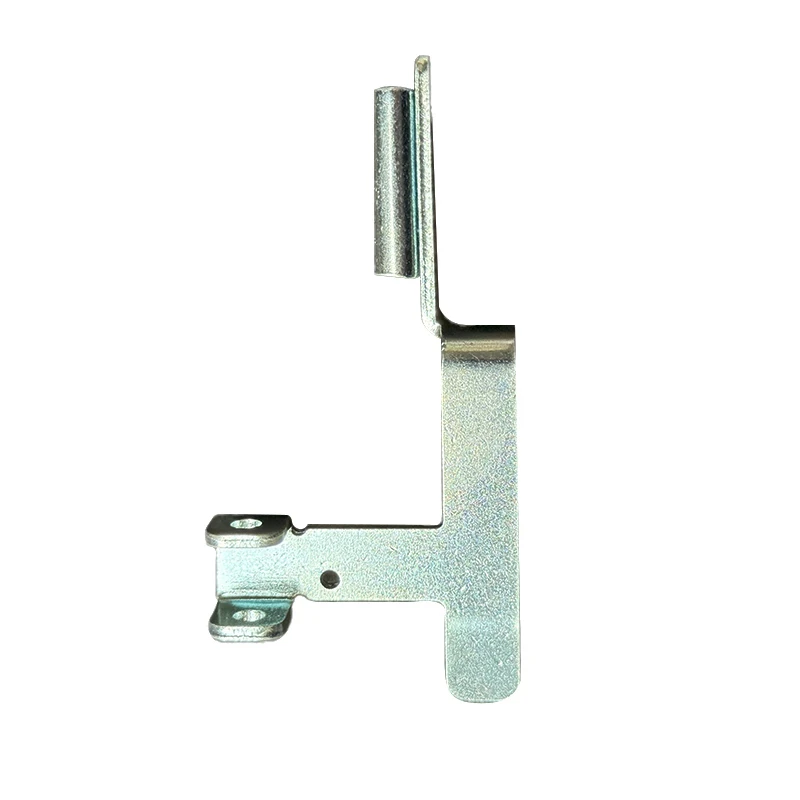


Common raw materials include cold-rolled steel sheets, alloy steel, aluminum alloys, and stainless steel. The welding difficulty and applicable scenarios vary significantly depending on the base material. Carbon steel offers good weldability and moderate processing costs, making it suitable for most load-bearing structural components. Stainless steel exhibits strong corrosion resistance and is often used in humid or corrosive environments; however, it is prone to deformation during welding, requiring stricter process control. Aluminum alloys are lightweight and have high thermal conductivity, but are more difficult to weld and are generally used for lightweight equipment components, resulting in higher overall processing costs.
Its core value lies in maintaining stable dimensional accuracy after welding. Ordinary welding is prone to thermal deformation. High temperatures can cause workpieces to twist and shift. If not properly controlled, this can lead to problems in subsequent assembly, such as misaligned holes and excessive clearances. Precision welding uses tooling and fixtures for positioning, controlling welding parameters, and welding in multiple passes to minimize thermal deformation, ensuring that the finished product's hole positions, dimensions, and assembly references are within the customer's required tolerances. This is especially crucial for workpieces that need to be assembled with other components; substandard precision will result in significant time spent correcting it in subsequent assembly stages.
The quality of the weld itself is also paramount. Qualified precision welded parts require full and uniform welds, minimizing defects such as porosity, slag inclusions, and incomplete welds. Some applications require welds to be ground smooth and may even necessitate flaw detection to ensure the structural strength of the welded area. During equipment operation, the welded area often withstands alternating loads and impacts. Hidden defects within the weld can easily lead to cracking during later use, directly causing component failure and, in severe cases, compromising the safety of the entire equipment.
After welding, subsequent processing can be carried out as needed, such as machining, grinding, stress relief treatment, spraying, galvanizing, and anodizing. Stress relief treatment eliminates residual internal stress from welding, reducing the probability of deformation and cracking during later use. Various surface treatments improve the rust and corrosion resistance of parts while optimizing their appearance. We can process materials supplied with standard drawings or accept samples provided by customers, completing the entire process from material preparation, bending, welding to final finishing.
Here are some practical tips for purchasing parties. During the drawing stage, it's best to clearly specify tolerance ranges, weld standards, and inspection requirements to avoid misunderstandings during processing. Don't prioritize cost reduction by relaxing welding process standards; rework costs due to weld defects and dimensional deviations often exceed the cost of the part itself. Different materials have different welding difficulties; during initial communication, it's helpful to explain the usage environment and stress conditions to facilitate matching the most suitable processing solution.
We support mass production and also undertake small-batch non-standard customization. Material selection, size specifications, and surface treatments can all be adjusted according to the actual project requirements. If you have related processing and procurement needs, please feel free to contact us for further discussion.
Hot Tags: precision welded parts, China precision welded parts manufacturers, suppliers, factory, Truck Step with Holes, Stainless Steel Butt Hinge, Straight Plate Beam Supports, stick weld exhaust pipe, Stainless Steel Z Bar Hanger, Heavy duty Welded Parts


